Reality Is Not Enough is an immersive, sensory deep-dive into the mind of Scottish writer Irvine Welsh.
Framed around a psychedelic trip experienced by Irvine in a DMT clinic, the film takes us on an immersive tour of the artist’s creative world — from his drug-fueled past and boundary-pushing literature to his lifelong love of music and DJing.
We spoke with director Paul Sng about the making of this hallucinatory documentary, how challenging it can be to secure funding for projects such as this and how filmmakers can adapt themselves to this environment, and what it was like collaborating with the iconic author himself.
Read our full conversation below.
As a director, you’ve always been drawn to stories that centre on social issues and the working class. What drew you to documentary filmmaking as a means of telling those stories?
An initial reason was meeting the band Sleaford Mods. I interviewed them for a music website that I was working for at the time, and they just spoke to me with their music. I wasn’t a filmmaker then, and I had no ambition to be one. I’ve always loved films and I did an MA in film history, but the idea of becoming a filmmaker just seemed out of reach. But when I met that band, I just had an idea to make a film about them and the tour that they were doing. It was filmed in the run-up to the 2015 election so it was also a political film - it was about austerity, as well as their music.
Documentary isn’t easier than fiction, but it’s more straightforward. If you’ve got a camera, and you’ve got a subject or a participant, you make a film. You can make a great documentary with a camera phone these days. And it’s not that you can’t do that with drama, but the budgets are higher, you need a script, you need actors, you need locations. For me, going into documentary was more accessible.
I do have ambition to do more fiction. I’ve done a couple of shorts. But I love documentary for its truth, and for the ability to be creative. You can get very creative with documentary, but it’s also about things that have happened, and it’s a way of holding up a mirror to reality. Fiction does that too, of course, but with documentary, it’s more direct.
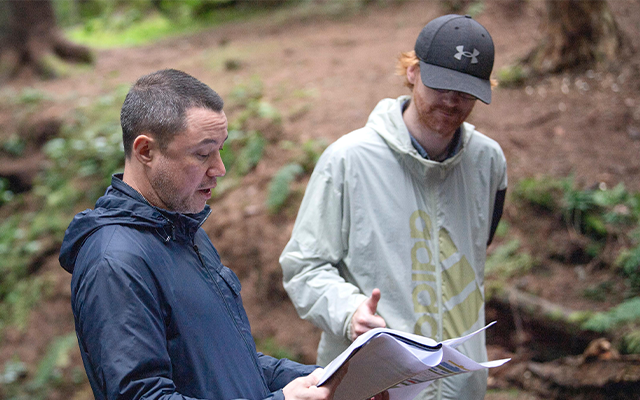
And how did this project come about? What was it about Irvine Welsh that interested you?
Like most people, I first came across Irvine with the film version of Trainspotting in 1996. I read the book soon after and I just loved his writing. Years later, I met him (we’ve got several friends in common) and we became friends. One evening, we went to see Todd Haynes’ The Velvet Underground documentary in Edinburgh, and I just asked him if he’d ever thought about making one. It all happened from there, really.
I set myself a rule, which was to do something that would not only reflect who Irvine is, but be worthy of his work. Something that was multi-layered, something that wasn’t a typical documentary. I didn’t want it to be linear. I wanted it to be more experiential, so that you find things out naturally.
It took us three years to make it, but not because it was a lengthy process in terms of the craft. It’s more about finding the money to make these things. It’s a really tough time out there making anything that’s independent.
In the past you’ve spoken about how documentary funding in the UK is scarce. Are there any changes you’d like to see made to help that? Was it difficult to get this film funded?
It was really, really challenging. We weren’t able to close finance until pretty much the end of the project (while we were doing post-production). It’s really tight out there. Budgets are shrinking, and there seems to be less of an appetite to take risks from commissioners and funders.
In term of how we can address the funding issue, it’s not any particular thing where I can point my finger and say ‘this needs to change’. Short of there being more risk-taking, and more funding being diverted from drama towards documentary, I don’t see it as a quick fix. It might be a case of having to adapt more as filmmakers, and working in a different way.
Nobody wants to compromise their vision as a creative. But if we as filmmakers can think in more cost-effective ways, and still be imaginative and tell these great bold stories, I think that might be the way.
If I was to suggest one thing, it would be that more government funding would go into the arts. In the UK, arts funding is far below what it is in France, for example. But short of the government coming up with more funding for independent filmmaking, it’s just a case of having to make things in more creative ways, which is challenging. Not everybody will find ways to do that.
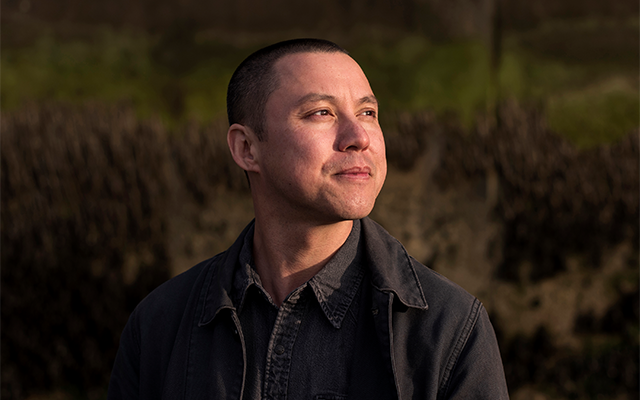
As the film touches on, Irvine can be quite a distrusting person. As a director, how did you go about making him feel comfortable and earning his trust? What did you feel your responsibilities to him were?
I would counter that a bit. He’s distrustful of authority, with good reason. He doesn’t trust politicians, with good reason. But with his friends, with his family and with people that he works with, I’ve not met anyone who trusts as much.
As someone to collaborate with on a film, he was very trusting. We showed him cuts as we were making it, and he would really like them. He’d sometimes have little notes here and there. He’s supportive, but he’s not going to tell you how to make it.
It helped that we knew each other already, but it was a very harmonious time. Of all the people I’ve worked with, it was probably the most harmonious in terms of a creative collaboration. He was brilliant.
You’ve touched on collaboration there. Irvine is obviously a very successful author, but the film also shows him working on the screenplay for his Crime television series. Did Irvine contribute at all to the creative structure of your film? Was he a collaborator or purely a subject?
Working with the film’s editor Angela Slaven, I came up with the structure, the idea and the creative vision. But without Irvine, we wouldn’t have that. So for me it was collaborative in terms of me telling Irvine my vision for the film and then him agreeing to it. He could’ve quite easily turned around and said that he didn’t want to talk about being on heroin - he’s already spoken about that a lot in his life.
It's a collaboration on the spirit of the film, with Irvine as the protagonist and participant. He has to do things to give us a story and a narrative. Without him taking the DMT (a hallucinogenic drug), we don’t have an inciting incident in the film. The DMT trip takes us on a journey with him, and the end of the trip takes us out of that journey, and shows us how he’s changed as a character.
When I look at documentary, I think in terms of fiction, and telling a story through character. So the film was very much driven by what Irvine was doing and then moulding it around a theme, because the film is driven by these themes of mortality, addiction, creativity and love.
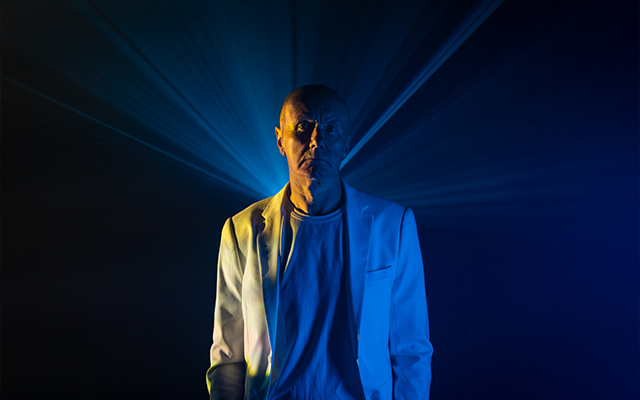
As you’ve just alluded to, Irvine taking DMT becomes the film’s framing device, giving it an almost psychedelic feel. Did you always plan to structure it in this way, or did that idea form during production?
I knew we were going to Toronto to film Irvine at a book festival. Someone on our team was also involved in making another film about hallucinogens, and my ears pricked up when he mentioned this DMT clinic. I knew that was something that could be interesting. We obviously ran it past Irvine, and he was very keen. The type of DMT that he takes in the film, 5-MeO-DMT, was something new for him. So he agreed to it.
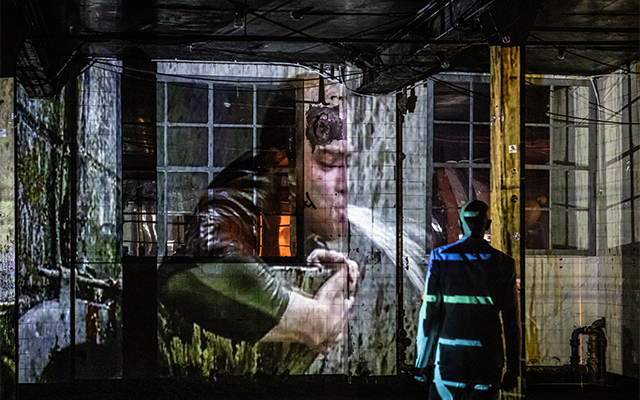
At that point we’d shot a lot of the film already, so I decided that this DMT trip would be our framing device. But we couldn’t just show Irvine lying on a mattress with an eye-mask on, because an audience might not find that interesting. So I came up with the idea of him wandering around an old warehouse in the dark in a white suit — from the film, The Man in the White Suit — and he would see projections of his screen adaptations, archive of the times he lived through (miners strikes, rave culture, the council scheme where he grew up), and then adding in scenes from the film as well, so that he’s literally walking through his life as we’re hearing him tell us about where he’s been, what’s happened to him and where he’s going.
That was the last thing we filmed, but a lot of the film was obviously made in the edit, putting in the master interview, the clips and the readings. One thing that I knew throughout the process was that the story would be told in a thematic way, rather than a linear way. So we start off with Irvine talking about his origins and a sense of place and belonging, and then we move through addiction, creativity, mortality, love and all these other themes.
How would you describe your role in the edit? How important do you feel it is for directors to be involved in that stage of a production?
It’s vital. But I like the editor to come in as soon as possible, while you’re in development. For me, the beauty of film is in the collaboration. I don’t always have the best idea. My job as a director is to be the captain of the ship and to have a vision for the film, but there will be moments where I won’t have the best idea. And if you open your mind to collaboration, particularly from your editor, it can be a wonderful way to work.
I like to have the editor on board very early to talk about the kind of film we’re making. I also like to give the editor the first cut, where I don’t sit next to them and they can just get on with it. As we get to rough cuts, we’ll spend more time working on it together. But only during the very end of the process, because I really value what they bring to it.
What Angela brought to this film was wonderful. Angela was somebody who understood Irvine already because she’d read his work, she’d seen the adaptations, she’s from Scotland and she’s grown up in similar times. It was a great experience working with Angela again, after she’d worked on Tish.
The film features the likes of Ruth Negga, Maxine Peake, Stephen Graham and Liam Neeson reading excerpts from Irvine’s work. How were you able to get so many acclaimed performers to take part?
It was a wish list. I’d worked with Ruth Negga before so luckily she said yes. I’d worked with Maxine Peake a couple of times so she was quite straightforward, too. Our casting director, Martha Stewart, then just contacted the agents of everyone on the list and it all came from there.
They’re doing it because they’re all fans of Irvine’s work, but they were also chosen for their voices and for what they can bring to the work itself. All of them did wonderful jobs. We also used a couple of emerging working-class actors (Olivia Caw and Mark Hannah) because it was important for us to be inclusive in that way.
Did you learn anything new while making the film that you’ll take with you into future projects?
Failure used to be my biggest fear but I learned from Irvine and the process of making the film that we don't learn much from success, but we can learn a huge amount when we fail. That was a big lesson for me, learning to accept that the mistakes we make don't have to damage our development - quite the opposite. I don't wake up in the morning thinking ‘how can I fail today?', but when I do make mistakes I try to analyse what happened and work out what can be gained from the experience.
Could you tell us a little about what you’re working on next?
Next up for me is Little Warrior, a feature documentary following Venezuelan boxer Johana Gómez as she attempts to escape poverty and qualify for the Olympics. It's based on a short documentary we made and we're aiming to have it ready for film festivals in 2026.
Words by Directors UK Distribution Assistant Dan Barnes
Directors UK members can join us for a screening of Reality Is Not Enough in Glasgow, followed by a Q&A with director Paul Sng and editor Angela Slaven.
When: Thu 23 Oct, 6.30pm (6pm doors)
Where: UWS Seminar Room, Film City, 401 Govan Road, Glasgow, G51 2QJ
To RSVP please email [email protected]


Have Your Say
Join the discussion on Facebook